Atlas MapSpecimensHotspots
Fossil Atlas: Specimen ProfileCatalog FA·ARCH·1861
Plate 35 · Carnivore

ArchaeopteryxFossil map and specimen profile

The Fossil That Bridged Dinosaurs and Birds

Binomial Archaeopteryx lithographica · ar-kee-OP-ter-iks

Late Jurassic - 151-148 Ma

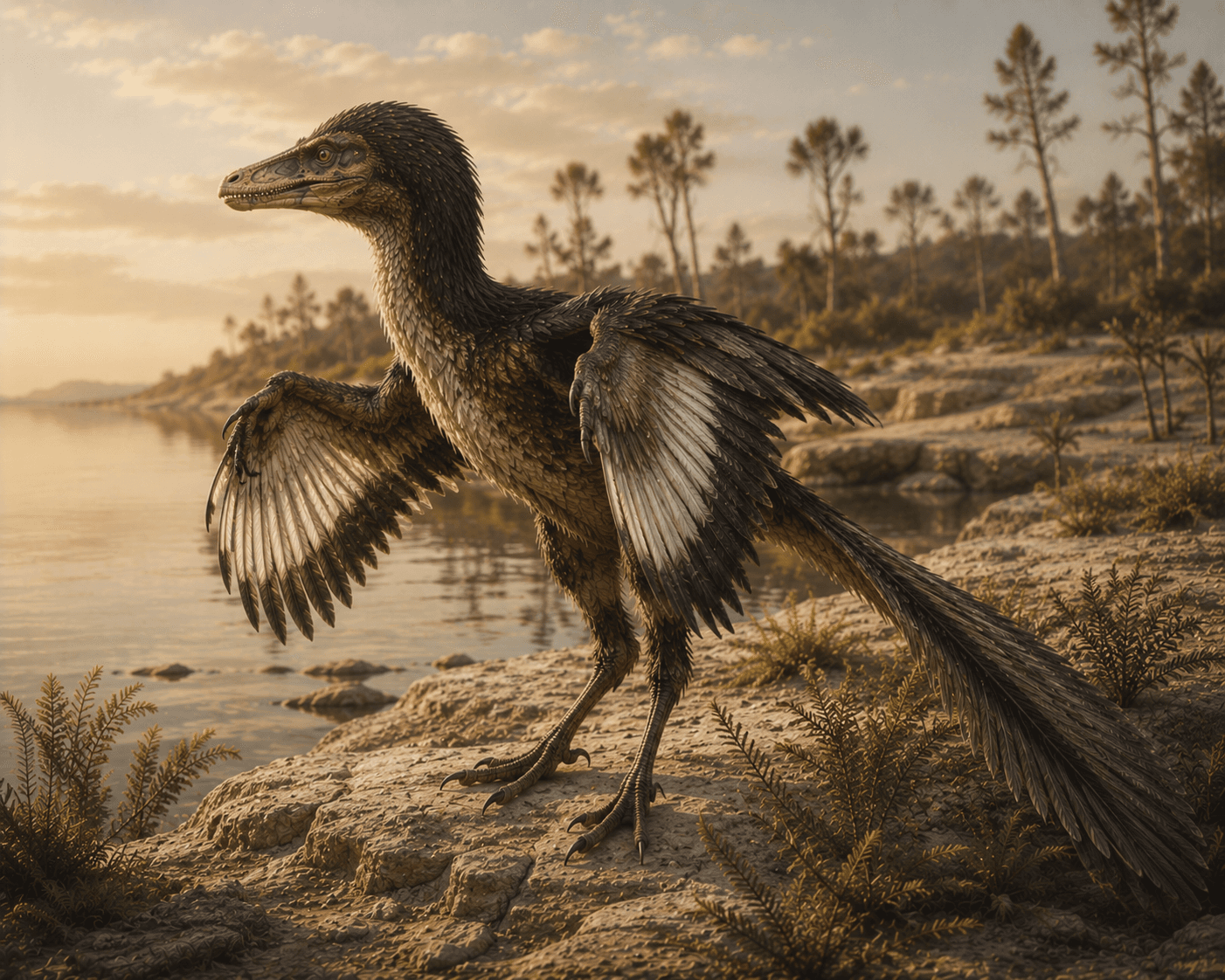
Illustrated reconstruction of ArchaeopteryxIllustration
Plate 35 · illustration onlyFA·ARCH·1861
Classification
Avialan dinosaur
Family
Archaeopterygidae
Genus / Species
Archaeopteryx lithographica
Diet
Carnivore
Range
Bavaria, Germany, especially Solnhofen Limestone lagoon deposits in the current atlas.
Quick provenance answer

Where have Archaeopteryx fossils been found?

Archaeopteryx fossil records in Fossil Atlas are mapped as selected modern discovery locations, with 3 source-backed records currently shown. Bavaria, Germany, especially Solnhofen Limestone lagoon deposits in the current atlas. Key mapped formations in the current dataset include Camarillas, Painten, Solnhofen Limestone. These pins are fossil record locations, not a complete ancient habitat map.

Mapped records
3
Modern range note
Bavaria, Germany, especially Solnhofen Limestone lagoon deposits in the current atlas.
Key formations
Camarillas, Painten, Solnhofen Limestone
Map caveat
Modern fossil locations, not ancient habitat.
Field account

Archaeopteryx was a Late Jurassic avialan dinosaur from the Solnhofen Limestone of Germany. Fossil Atlas presents it with fossil-location context, bird-evolution relevance, and careful caveats.

Built to scale

Size against a person

Drawn true to scale on a metre ruler.

0 m2468101214161820222426
Archaeopteryx, 0.5 m (1.6 ft)Adult human, 1.8 m0× longer than a person is tall
Field measurements

Measurements & capabilities

MeasuredEstimate

Length

measured

0.5 m · 1.6 ft

Largest known specimens

Height

measured

0.25 m (0.8 ft)

Body mass

estimate

0.8 kg · 1.8 lb

Typical adult

Top speed

estimate

16 km/h · 10 mph

Modelled, debated

Life & behaviour

How Archaeopteryx lived

Archaeopteryx was a small, crow-sized avialan dinosaur from the Late Jurassic Solnhofen lagoons of what is now Bavaria. It had the feathered wings and asymmetric flight feathers of a bird alongside the toothed jaws, clawed hands, and long bony tail of a theropod dinosaur. Whether it could sustain powered flight or was primarily a glider is still debated, but its position in the evolutionary tree makes it central to understanding how birds evolved.

Flight feathers

Asymmetric primary feathers similar in structure to those of modern flying birds, suggesting at least some degree of flight capability. The wing loading and muscle attachment points are debated.

Teeth

Small, conical teeth in both jaws, a feature retained from its non-avian theropod ancestors and absent in modern birds.

The bony tail

A long, bony tail rather than the fused pygostyle of modern birds. Flight feathers attached along its length form a tail fan, unlike anything in living birds.

Clawed hands

Three clawed fingers on each wing, likely useful for gripping branches or prey. Modern birds retain vestiges of these bones but no external claws.

Known from

Fossil evidence

01Feather impressions
02Skeletons
03Wing feathers
04Long bony tail
Key formations
CamarillasPaintenSolnhofen Limestone
Geologic timeline

When they lived

Position of this animal’s known range across 252 million years of the Mesozoic and beyond.

252 MaToday

151-148 million years ago

From the notebook

Field notes

01

Archaeopteryx preserves feathers and a long bony tail in the same fossil story.

02

It is an avialan dinosaur, so the page distinguishes it from typical non-avian dinosaur examples.

03

The Solnhofen Limestone is a famous European fossil-lagerstatte.

Discovery & debate

How we know Archaeopteryx

A single feather was described by Hermann von Meyer in 1861, followed shortly after by the first skeleton from the Solnhofen quarries. The timing, two years after Darwin's On the Origin of Species, gave the fossil immediate significance as apparent evidence of transitional forms. Twelve body specimens and the isolated feather are now known, all from the Solnhofen Limestone of Bavaria. Each new specimen has contributed to debate about exactly where Archaeopteryx sits in the bird family tree and whether it was a direct ancestor of modern birds or a closely related side branch.

Shared the landscape

Lived alongside

Animals known from the same deposits and time as Archaeopteryx.

  • Compsognathus

    A small, fast theropod from the same Solnhofen deposits, showing the non-avian dinosaurs sharing Archaeopteryx's lagoon environment.

    Not yet mapped
  • Rhamphorhynchus

    A long-tailed pterosaur from the same Solnhofen limestone, flying over the same shallow tropical lagoons.

    Not yet mapped
  • Scaphognathus

    Another Solnhofen pterosaur, part of the broader flying fauna of the Late Jurassic Tethys lagoon environment.

    Not yet mapped
Same family

Close relatives

Other members of Archaeopterygidae.

Modern discovery map

Archaeopteryx fossil discovery map

Pins show selected fossil records for Archaeopteryx; use them as modern discovery evidence, not a complete range map. Modern fossil discovery map: pins show where selected fossil and specimen records were found today, not ancient Earth positions. What does this mean?

Modern Fossil Discovery Map

Specimen evidence

Museum media and models

No open specimen media or embeddable model assets are available in the local enrichment data yet.

Research notes

Archaeopteryx fossil map FAQ

Where have Archaeopteryx fossils been found?

Archaeopteryx is represented here by selected fossil records from bavaria, germany, especially solnhofen limestone lagoon deposits in the current atlas. Fossil Atlas maps those records as modern discovery locations.

Is this map where Archaeopteryx lived?

No. The map shows modern fossil discovery locations from selected records. Ancient habitat and paleogeographic reconstructions are separate questions.

What formation is Archaeopteryx associated with here?

The current Fossil Atlas records include Camarillas. Formation coverage depends on the selected dataset and may not be complete.

Can I make a Archaeopteryx expedition card?

Yes. Use the expedition card generator to turn the Archaeopteryx map and specimen profile into a shareable card.

Data sources

Attribution

Caveats

Important notes

Selected fossil records from PBDB and museum biodiversity aggregators. This is not a complete fossil count by country; source labels and confidence notes help distinguish canonical paleobiology records from specimen-media records.

Reconstruction images are labeled illustrations and do not represent fossil evidence. Size, speed, and bite-force figures are typical published estimates and remain subject to revision as new specimens are described.

Trust note

Selected source-backed records

Maps use curated PBDB, museum, and specimen-source records with visible caveats.

Trust note

Modern discovery locations

Pins show where fossils were found or reported today, not exact ancient habitat positions.

Trust note

Reconstruction is not evidence

Artwork is labeled separately from specimen photos, maps, and source records.

Request desk

Request the next dinosaur map

Request another dinosaur like Archaeopteryx, submit a correction, or tell us what would make this page useful as a printable card.

Tell us which dinosaur or fossil site to map next, flag a correction, suggest a new pin, or request a card pack. Hit the button to open a prefilled email. We read every one.

Email request