Where have Baryonyx fossils been found?
Baryonyx is represented here by selected fossil records from europe, especially wealden and related early cretaceous records in the current atlas. Fossil Atlas maps those records as modern discovery locations.
“The Claw That Rewrote British Dinosaurs”
Binomial Baryonyx walkeri · bar-ee-ON-iks
Early Cretaceous - 130-125 Ma
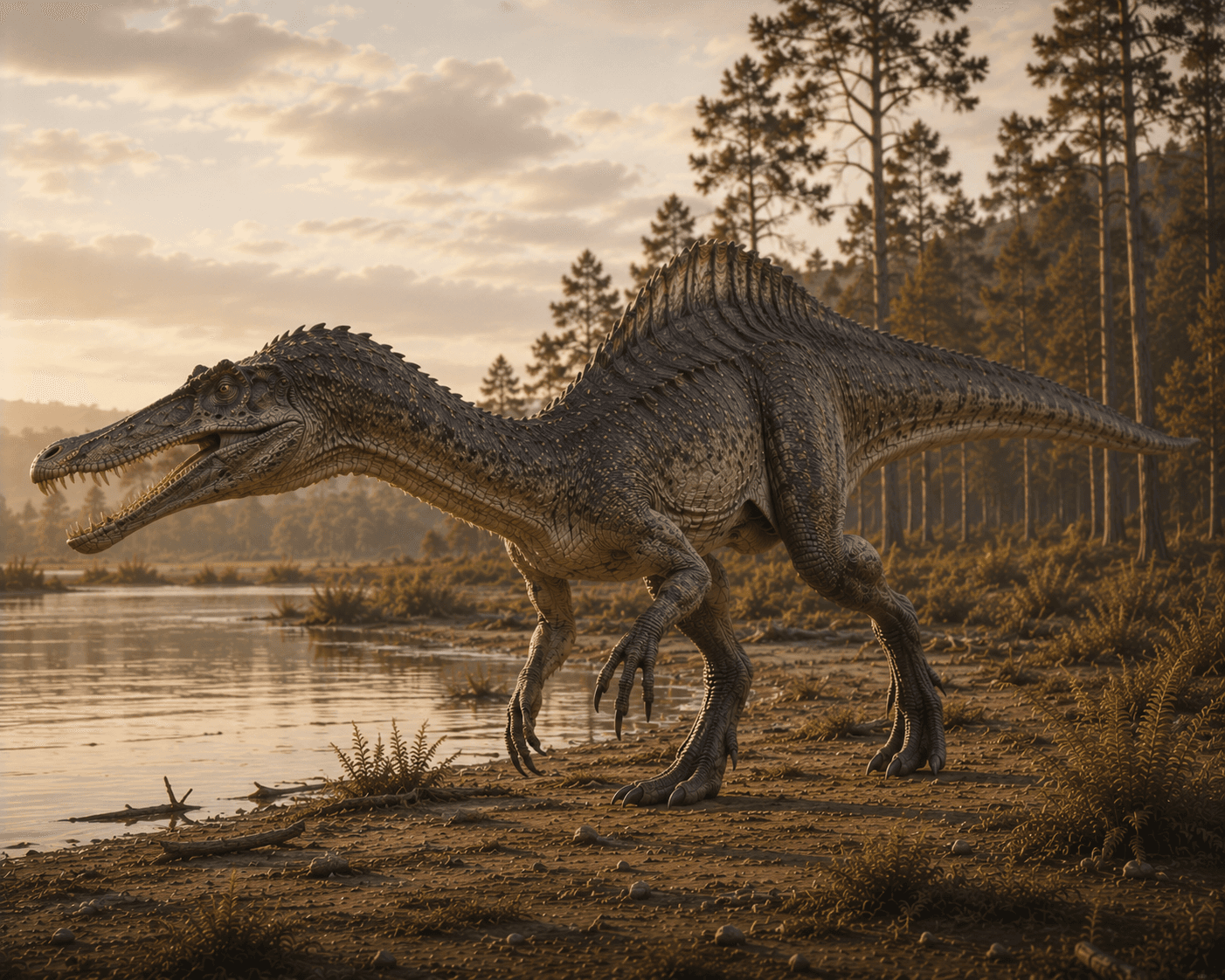 Illustration
Baryonyx fossil records in Fossil Atlas are mapped as selected modern discovery locations, with 11 source-backed records currently shown. Europe, especially Wealden and related Early Cretaceous records in the current atlas. Key mapped formations in the current dataset include Wessex, Pinilla de los Moros, Urbión. These pins are fossil record locations, not a complete ancient habitat map.
Baryonyx was an Early Cretaceous spinosaurid known from the United Kingdom and related European records. Fossil Atlas links it to Wealden context, selected map pins, and source caveats.
Drawn true to scale on a metre ruler.
Length
measured9 m · 30 ft
Largest known specimens
Height
measured2.7 m (9 ft)
Body mass
estimate1,700 kg · 3,750 lb
Typical adult
Top speed
estimate32 km/h · 20 mph
Modelled, debated
Baryonyx was a large spinosaurid discovered in Surrey in 1983. It is one of the most completely known spinosaurids and provides important context for understanding the whole family, because the specimen preserved fish scales and partial fish bones inside its body cavity, giving direct evidence of piscivorous feeding. The large thumb claw for which it is named was probably used to hook fish or pin prey.
The claw
A large, curved claw from the first digit of the hand, around 31 centimetres long on the known specimen. Probably used for catching fish or securing larger prey on land.
Diet evidence
Fish scales and bones found inside the body cavity of the main specimen provide rare direct evidence of what the animal ate. Some partial Iguanodon bones were also found near the stomach region, suggesting it occasionally scavenged or took larger prey.
The skull
Long, narrow, and crocodilian in shape, almost identical in function to Suchomimus and designed for catching slippery aquatic prey.
The specimen
Most of what is known about Baryonyx comes from a single skeleton, which is unusually complete for a large British dinosaur and was found by an amateur collector rather than a professional expedition.
Position of this animal’s known range across 252 million years of the Mesozoic and beyond.
130-125 million years ago
Baryonyx preserved evidence linked to fish-eating behavior.
Its large thumb claw gives it a memorable fossil hook for classroom pages.
It links British Early Cretaceous records with the broader spinosaurid fossil record.
William J. Walker found the large thumb claw in a Surrey clay pit in 1983. The Natural History Museum excavated the rest of the skeleton and Alan Charig and Angela Milner formally described it in 1986, naming the species walkeri after the discoverer. It was the most complete large predatory dinosaur skeleton found in Britain at the time and significantly expanded knowledge of European Early Cretaceous ecosystems. The stomach contents made it one of the rare cases where direct dietary evidence survives in the fossil record.
Animals known from the same deposits and time as Baryonyx.
Iguanodon
A large ornithopod from the Wealden Formation, present in the same deposits. Partial Iguanodon bones were found near the Baryonyx stomach region.
Polacanthus
A nodosaurid ankylosaur sharing the Wealden ecosystem.
Hypsilophodon
A small, fast ornithopod from the same formation.
Other members of Spinosauridae.
Spinosaurus
The largest spinosaurid and the most famous member of the family.
Suchomimus
An African spinosaurid with a very similar long snout, from slightly later deposits in Niger.
Irritator
A Brazilian spinosaurid, showing the family spread across the landmasses of the Cretaceous south.
Pins show selected fossil records for Baryonyx; use them as modern discovery evidence, not a complete range map. Modern fossil discovery map: pins show where selected fossil and specimen records were found today, not ancient Earth positions. What does this mean?
Specimen evidence
No open specimen media or embeddable model assets are available in the local enrichment data yet.
Baryonyx is represented here by selected fossil records from europe, especially wealden and related early cretaceous records in the current atlas. Fossil Atlas maps those records as modern discovery locations.
No. The map shows modern fossil discovery locations from selected records. Ancient habitat and paleogeographic reconstructions are separate questions.
The current Fossil Atlas records include Wessex. Formation coverage depends on the selected dataset and may not be complete.
Yes. Use the expedition card generator to turn the Baryonyx map and specimen profile into a shareable card.
Selected fossil records from PBDB and museum biodiversity aggregators. This is not a complete fossil count by country; source labels and confidence notes help distinguish canonical paleobiology records from specimen-media records.
Reconstruction images are labeled illustrations and do not represent fossil evidence. Size, speed, and bite-force figures are typical published estimates and remain subject to revision as new specimens are described.
Maps use curated PBDB, museum, and specimen-source records with visible caveats.
Pins show where fossils were found or reported today, not exact ancient habitat positions.
Artwork is labeled separately from specimen photos, maps, and source records.
Request desk
Request another dinosaur like Baryonyx, submit a correction, or tell us what would make this page useful as a printable card.
Tell us which dinosaur or fossil site to map next, flag a correction, suggest a new pin, or request a card pack. Hit the button to open a prefilled email. We read every one.
Email request