Fossil Atlas — Specimen ProfileCatalog FA·IGUA·1825
Plate 24 · Herbivore

IguanodonFossil map and specimen profile

Binomial Iguanodon bernissartensis · ih-GWAH-noh-don

Early Cretaceous - 126-113 Ma

Classification
Ornithopod dinosaur
Family
Iguanodontidae
Genus / Species
Iguanodon bernissartensis
Diet
Herbivore
Range
Europe and North Africa, with selected records from Wealden, Weald Clay, Vectis, and related Early Cretaceous units.
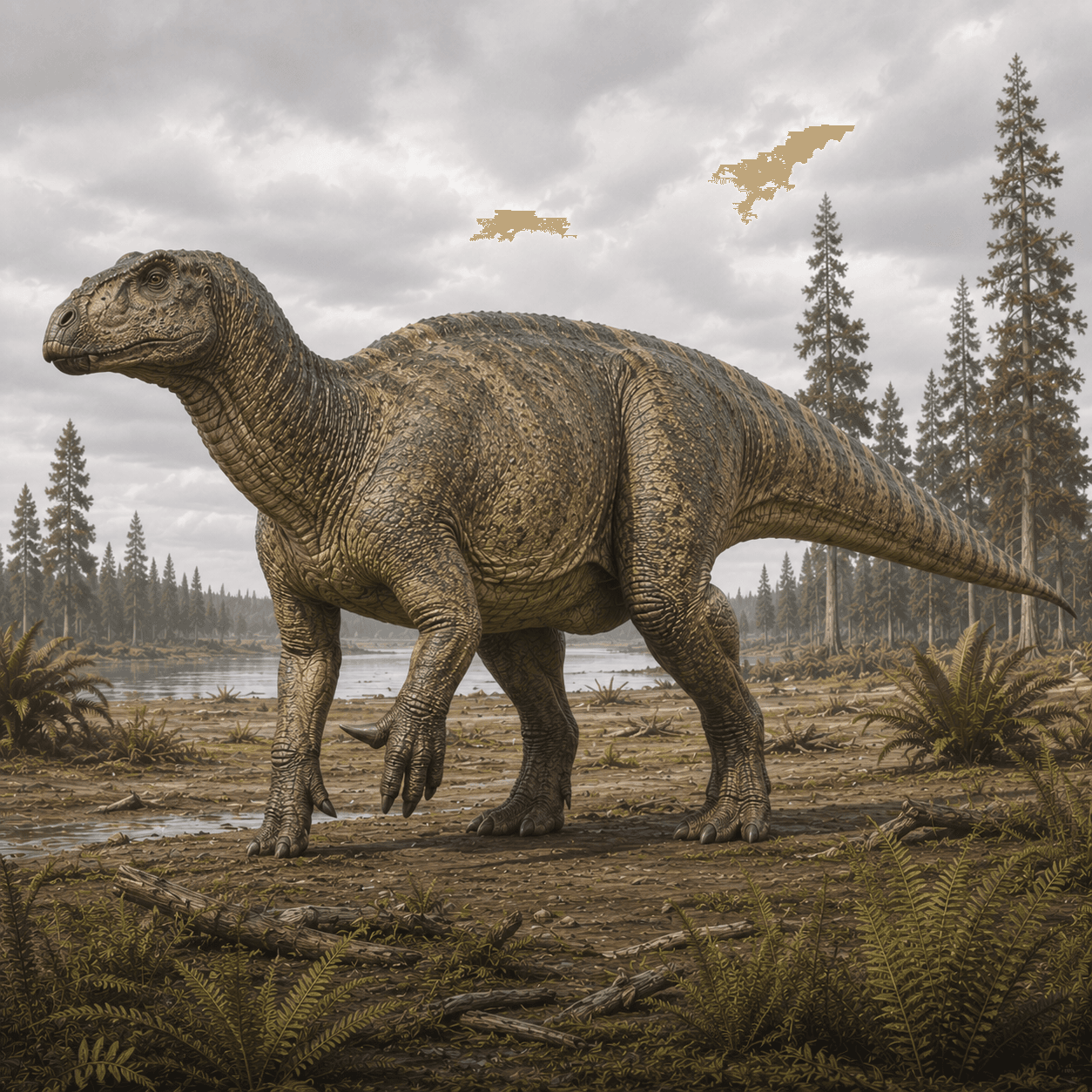
AI reconstruction of IguanodonAI reconstruction
Plate 24 — illustration, not fossil evidenceFA·IGUA·1825
Quick provenance answer

Where have Iguanodon fossils been found?

Iguanodon fossil records in Fossil Atlas are mapped as selected modern discovery locations, with 308 source-backed records currently shown. Europe and North Africa, with selected records from Wealden, Weald Clay, Vectis, and related Early Cretaceous units. Key mapped formations in the current dataset include Wealden , Wealden Group, Oxford Clay Formation, Weald Clay Formation. These pins are fossil record locations, not a complete ancient habitat map.

This remains a specimen profile: the reconstruction, measurements, field account, and evidence sections stay intact. The fossil-map answer is surfaced here so visitors from search can orient themselves before reading the full dossier.

Mapped records
308
Modern range note
Europe and North Africa, with selected records from Wealden, Weald Clay, Vectis, and related Early Cretaceous units.
Key formations
Wealden , Wealden Group, Oxford Clay Formation, Weald Clay Formation
Map caveat
Modern fossil locations, not ancient habitat.
Field account

Iguanodon is one of the foundational names in dinosaur science. Fossil Atlas uses selected records from the Wealden and related Early Cretaceous units to build a United Kingdom and European fossil-map path.

Built to scale

Size against a person

Drawn true to scale on a metre ruler.

0 m2468101214161820222426
Iguanodon10 m (33 ft)Adult human — 1.8 m6× longer than a person is tall
Field measurements

Measurements & capabilities

MeasuredEstimate

Length

measured

10 m · 33 ft

Largest known specimens

Height

measured

3 m (10 ft)

Body mass

estimate

3,200 kg · 7,000 lb

Typical adult

Top speed

estimate

24 km/h · 15 mph

Modelled, debated

Known from

Fossil evidence

01Teeth
02Thumb spikes
03Limb bones
04Partial skeletons
Key formations
Wealden , Wealden GroupOxford Clay FormationWeald Clay FormationWealden GroupWessex FormationWadhurst Clay FormationWest Melbury Marly Chalk FormationAshdown FormationPurbeck GroupUpper Greensand FormationTunbridge Wells Sand FormationDurlstonSandgateLower GreensandWessexAshdownWealdenTunbridge Wells SandHuértelesArcillas de MorellaPinilla de los MorosWoburn SandBissett ConglomerateTrichinopolyWeald ClayLadeirasUrbiónEncisoEl CastellarWadhurst ClayHaolingVectisCamadas de AlmargemWadi MilkCalcaires à SpatanguesPapo SecoPurbeckCamarillasHastingsEl ColladoLulworth
Geologic timeline

When they lived

Position of this animal’s known range across 252 million years of the Mesozoic and beyond.

252 MaToday

126-113 million years ago

From the notebook

Field notes

01

Iguanodon was one of the first dinosaur genera ever named.

02

Its thumb spike was once misunderstood in early reconstructions.

03

Its records give Fossil Atlas a strong entry point into British dinosaur history.

Modern discovery map

Iguanodon fossil discovery map

Pins show selected fossil records for Iguanodon; use them as modern discovery evidence, not a complete range map. Modern fossil discovery map: pins show where selected fossil and specimen records were found today, not ancient Earth positions. What does this mean?

Modern Fossil Discovery Map

Specimen evidence

Museum images and 3D records

These are sourced specimen assets, separate from the AI reconstruction. Only media with clear open or reusable rights is displayed by default.

Research notes

Iguanodon fossil map FAQ

Where have Iguanodon fossils been found?

Iguanodon is represented here by selected fossil records from europe and north africa, with selected records from wealden, weald clay, vectis, and related early cretaceous units. Fossil Atlas maps those records as modern discovery locations.

Is this map where Iguanodon lived?

No. The map shows modern fossil discovery locations from selected records. Ancient habitat and paleogeographic reconstructions are separate questions.

What formation is Iguanodon associated with here?

The current Fossil Atlas records include Wealden , Wealden Group. Formation coverage depends on the selected dataset and may not be complete.

Can I make a Iguanodon expedition card?

Yes. Use the expedition card generator to turn the Iguanodon map and specimen profile into a shareable card.

Data sources

Attribution

Caveats

Important notes

Selected fossil records from PBDB and museum biodiversity aggregators. Source labels and confidence notes help distinguish canonical paleobiology records from specimen-media records.

Reconstruction images are labeled illustrations and do not represent fossil evidence. Size, speed, and bite-force figures are typical published estimates and remain subject to revision as new specimens are described.

Trust note

Selected source-backed records

Maps use curated PBDB, museum, and specimen-source records with visible caveats.

Trust note

Modern discovery locations

Pins show where fossils were found or reported today, not exact ancient habitat positions.

Trust note

Reconstruction is not evidence

Artwork is labeled separately from specimen photos, maps, and source records.

Request desk

Request the next dinosaur map

Request another dinosaur like Iguanodon, submit a correction, or tell us what would make this page useful as a printable card.

Email capture is ready for a form endpoint. Until `NEXT_PUBLIC_REQUEST_FORM_ENDPOINT` is configured, the request desk opens a prefilled email.

Email request