Where have Gallimimus fossils been found?
Gallimimus is represented here by selected fossil records from mongolia, especially nemegt formation records in the current atlas. Fossil Atlas maps those records as modern discovery locations.
“The Fastest Dinosaur of the Nemegt”
Binomial Gallimimus bullatus · GAL-ih-MY-mus
Late Cretaceous - 70-66 Ma
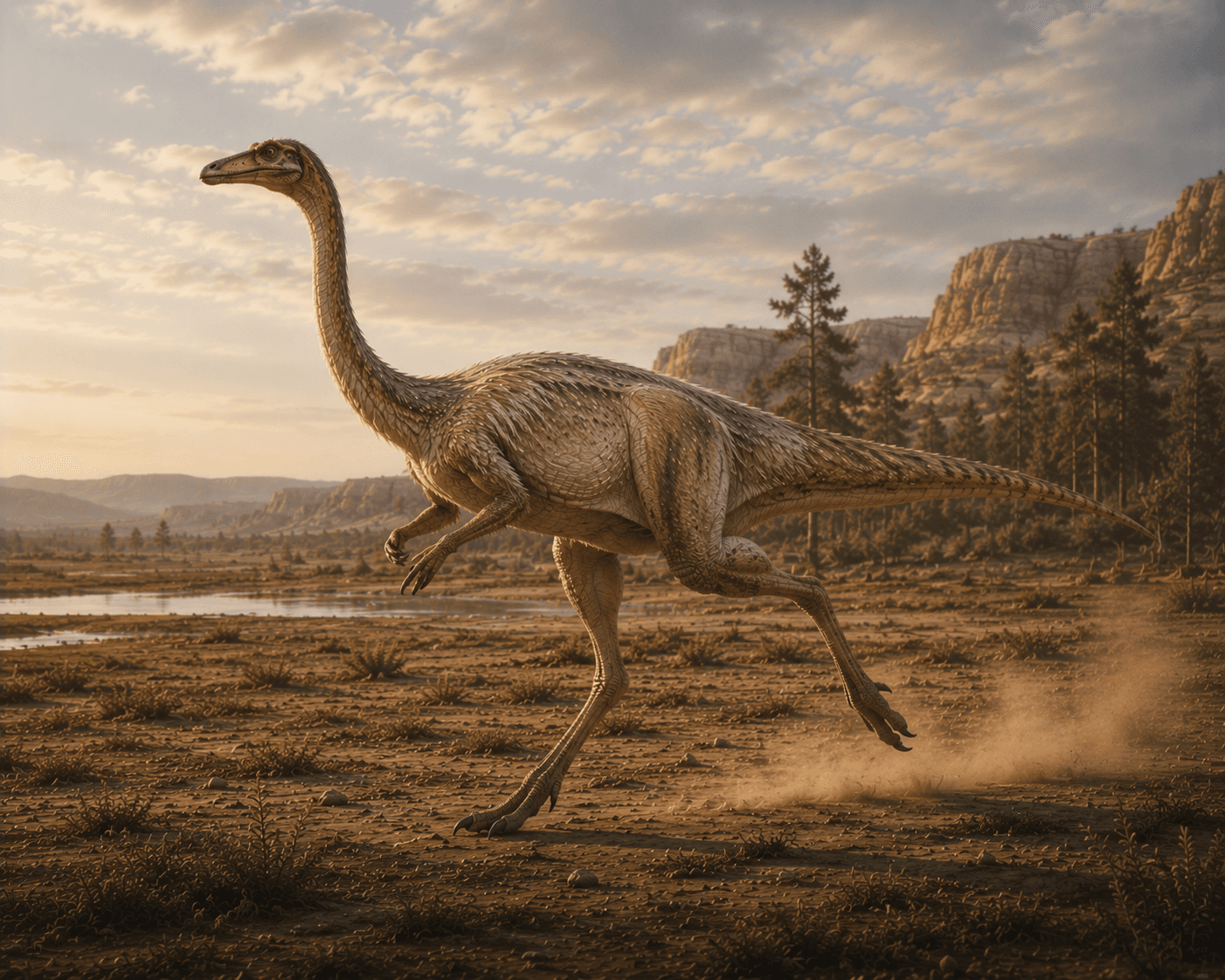 Illustration
Gallimimus fossil records in Fossil Atlas are mapped as selected modern discovery locations, with 15 source-backed records currently shown. Mongolia, especially Nemegt Formation records in the current atlas. Key mapped formations in the current dataset include Baruungoyot, Nemegt, Bissekty. These pins are fossil record locations, not a complete ancient habitat map.
Gallimimus was a large ornithomimid dinosaur from the Late Cretaceous Nemegt Formation of Mongolia. Fossil Atlas maps selected discovery records and links it to the broader Gobi fossil story.
Drawn true to scale on a metre ruler.
Length
measured6 m · 20 ft
Largest known specimens
Height
measured2 m (6.5 ft)
Body mass
estimate440 kg · 970 lb
Typical adult
Top speed
estimate56 km/h · 35 mph
Modelled, debated
Gallimimus was one of the largest ornithomimids, a group of long-legged, toothless theropods convergently similar in some respects to ostriches. It was probably one of the fastest dinosaurs, with long hindlimbs relative to body size. Its feeding is less clear: the toothless beak and the shape of its hands suggest it was an opportunistic omnivore, possibly including small animals, eggs, invertebrates, and plant material in its diet.
Speed
Long femur, tibia, and metatarsals proportioned for running. Speed estimates vary, but the overall build is consistent with fast sustained movement at the high end of estimates for any dinosaur.
The beak
Completely toothless, with a wide, flat beak. In some related ornithomimids, comb-like structures suggest filter feeding in water, though this is not confirmed for Gallimimus.
Hands
Long, three-fingered hands with relatively straight claws, adapted for raking or grasping rather than cutting.
Social behavior
Multiple individuals are known from the Nemegt Formation. The ornithomimid lifestyle has been compared with modern ratites, which often live in loose social groups.
Position of this animal’s known range across 252 million years of the Mesozoic and beyond.
70-66 million years ago
Gallimimus is one of the most recognizable ostrich-like dinosaurs.
Its Nemegt records give Mongolia pages a non-predator, non-armored dinosaur anchor.
Its name means chicken mimic.
Polish-Mongolian expeditions recovered Gallimimus specimens from the Nemegt Basin starting in 1963. Rinchen Barsbold named the genus in 1972 from material including a nearly complete skeleton. It became internationally recognisable after appearing in the 1993 Jurassic Park film in a stampeding herd sequence. The real animal was from Mongolia, not a fictional Pacific island, and it lived roughly 70 million years before the events depicted.
Animals known from the same deposits and time as Gallimimus.
Tarbosaurus
The apex predator of the Nemegt Formation and the main predatory threat to Gallimimus.
Therizinosaurus
A slow-moving, long-clawed herbivore sharing the same formation.
Saurolophus
A large crested hadrosaur from the Nemegt, sharing the same river-system habitats.
Other members of Ornithomimidae.
Struthiomimus
A North American ornithomimid of similar build, from the Late Cretaceous of Canada.
Ornithomimus
Another Canadian ornithomimid, slightly smaller and from the same time period as Struthiomimus.
Deinocheirus
A giant ornithomimosaur from the Nemegt Formation with enormous arms and a very different body plan from typical ornithomimids, showing the range within the group.
Pins show selected fossil records for Gallimimus; use them as modern discovery evidence, not a complete range map. Modern fossil discovery map: pins show where selected fossil and specimen records were found today, not ancient Earth positions. What does this mean?
Specimen evidence
No open specimen media or embeddable model assets are available in the local enrichment data yet.
Gallimimus is represented here by selected fossil records from mongolia, especially nemegt formation records in the current atlas. Fossil Atlas maps those records as modern discovery locations.
No. The map shows modern fossil discovery locations from selected records. Ancient habitat and paleogeographic reconstructions are separate questions.
The current Fossil Atlas records include Baruungoyot. Formation coverage depends on the selected dataset and may not be complete.
Yes. Use the expedition card generator to turn the Gallimimus map and specimen profile into a shareable card.
Selected fossil records from PBDB and museum biodiversity aggregators. This is not a complete fossil count by country; source labels and confidence notes help distinguish canonical paleobiology records from specimen-media records.
Reconstruction images are labeled illustrations and do not represent fossil evidence. Size, speed, and bite-force figures are typical published estimates and remain subject to revision as new specimens are described.
Maps use curated PBDB, museum, and specimen-source records with visible caveats.
Pins show where fossils were found or reported today, not exact ancient habitat positions.
Artwork is labeled separately from specimen photos, maps, and source records.
Request desk
Request another dinosaur like Gallimimus, submit a correction, or tell us what would make this page useful as a printable card.
Tell us which dinosaur or fossil site to map next, flag a correction, suggest a new pin, or request a card pack. Hit the button to open a prefilled email. We read every one.
Email request