Where have Therizinosaurus fossils been found?
Therizinosaurus is represented here by selected fossil records from mongolia, especially nemegt formation context in the current atlas. Fossil Atlas maps those records as modern discovery locations.
“The Long-Clawed Mystery of Mongolia”
Binomial Therizinosaurus cheloniformis · THER-ih-zin-oh-SORE-us
Late Cretaceous - 70-66 Ma
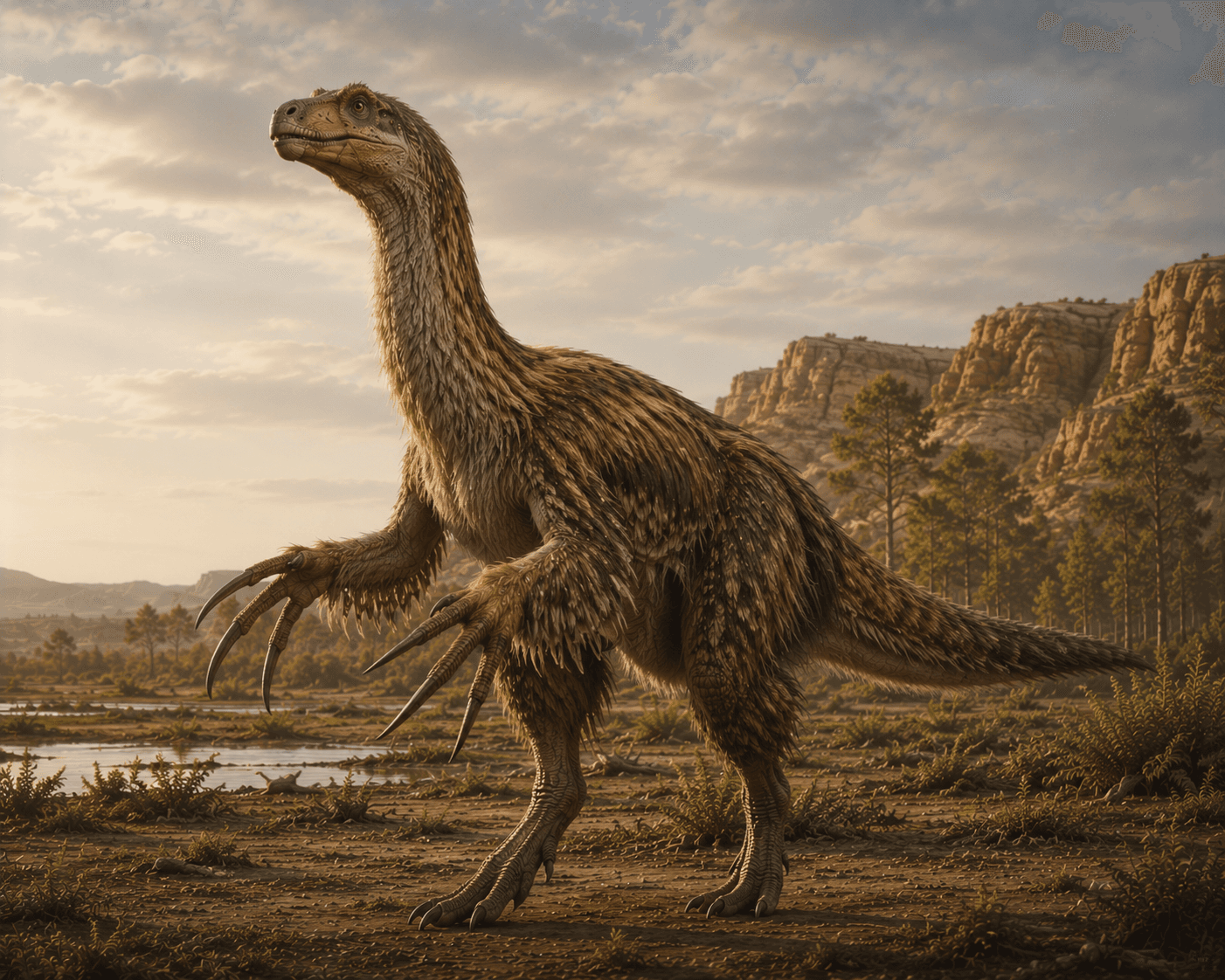 Illustration
Therizinosaurus fossil records in Fossil Atlas are mapped as selected modern discovery locations, with 1 source-backed records currently shown. Mongolia, especially Nemegt Formation context in the current atlas. Key mapped formations in the current dataset include Nemegt Formation. These pins are fossil record locations, not a complete ancient habitat map.
Therizinosaurus was a large, long-clawed therizinosaurid from Late Cretaceous Mongolia. Fossil Atlas links it to Nemegt Formation context with clear caveats around fragmentary evidence.
Drawn true to scale on a metre ruler.
Length
measured10 m · 33 ft
Largest known specimens
Height
measured5 m (16 ft)
Body mass
estimate5,000 kg · 11,000 lb
Typical adult
Top speed
estimate24 km/h · 15 mph
Modelled, debated
Therizinosaurus was a massive therizinosaur with the longest manual claws known in any animal, reaching up to 70 centimetres on some estimates. Despite belonging to the theropod group that includes predatory dinosaurs, Therizinosaurus was almost certainly herbivorous or primarily herbivorous. Its heavy build, wide hips, and large gut cavity point to a plant-processing animal that used its claws to pull down branches rather than to hunt.
The claws
Three enormous curved claws on each hand, probably used for pulling vegetation within reach. The longest reach over half a metre, making them the longest claws of any known animal.
The body
Heavy, broad-hipped build unusual for a theropod, with a large gut cavity suited to fermenting plant material. The proportions are more like a large ground sloth than a predator.
Originally a turtle
When the first claws were found in 1948, Evgeny Maleev thought they belonged to a giant turtle-like creature. Later finds of related animals with more complete skeletons clarified that it was a feathered theropod.
Feathers
Not confirmed for Therizinosaurus directly, but closely related therizinosaurs from China are known to have had feathers, making their presence in Therizinosaurus highly probable.
Position of this animal’s known range across 252 million years of the Mesozoic and beyond.
70-66 million years ago
Therizinosaurus had some of the longest manual claws known among dinosaurs.
Despite being a theropod, it is usually interpreted as herbivorous or mostly herbivorous.
Its page makes the Nemegt Formation feel more distinctive than a tyrannosaur-only cluster.
Soviet-Mongolian expeditions recovered the first claws in the Nemegt Formation in 1948. Maleev's initial turtle interpretation was corrected over subsequent decades as more complete therizinosaur relatives were found in China. Therizinosaurus itself is still known mainly from limb and claw material; a complete skeleton has not been found. The body reconstruction shown on this page is based substantially on related therizinosaurs from the Yixian Formation of China.
Animals known from the same deposits and time as Therizinosaurus.
Tarbosaurus
The apex predator of the Nemegt Formation and the main predatory threat to younger or smaller Therizinosaurus.
Gallimimus
A fast-moving ornithomimid sharing the same Nemegt ecosystem.
Saurolophus
A large crested hadrosaur from the Nemegt, sharing the same river-system habitats.
Other members of Therizinosauridae.
Beipiaosaurus
A feathered therizinosaur from China whose plumage is well documented, useful for understanding what Therizinosaurus likely looked like.
Erlikosaurus
A Mongolian therizinosaur with a well-preserved skull that helps reconstruct the head Therizinosaurus probably had.
Segnosaurus
Another Mongolian therizinosaur from the same Cretaceous deposits, better known from skeletal material than Therizinosaurus.
Pins show selected fossil records for Therizinosaurus; use them as modern discovery evidence, not a complete range map. Modern fossil discovery map: pins show where selected fossil and specimen records were found today, not ancient Earth positions. What does this mean?
Specimen evidence
No open specimen media or embeddable model assets are available in the local enrichment data yet.
Therizinosaurus is represented here by selected fossil records from mongolia, especially nemegt formation context in the current atlas. Fossil Atlas maps those records as modern discovery locations.
No. The map shows modern fossil discovery locations from selected records. Ancient habitat and paleogeographic reconstructions are separate questions.
The current Fossil Atlas records include Nemegt Formation. Formation coverage depends on the selected dataset and may not be complete.
Yes. Use the expedition card generator to turn the Therizinosaurus map and specimen profile into a shareable card.
Selected fossil records from PBDB and museum biodiversity aggregators. This is not a complete fossil count by country; source labels and confidence notes help distinguish canonical paleobiology records from specimen-media records.
Reconstruction images are labeled illustrations and do not represent fossil evidence. Size, speed, and bite-force figures are typical published estimates and remain subject to revision as new specimens are described.
Maps use curated PBDB, museum, and specimen-source records with visible caveats.
Pins show where fossils were found or reported today, not exact ancient habitat positions.
Artwork is labeled separately from specimen photos, maps, and source records.
Request desk
Request another dinosaur like Therizinosaurus, submit a correction, or tell us what would make this page useful as a printable card.
Tell us which dinosaur or fossil site to map next, flag a correction, suggest a new pin, or request a card pack. Hit the button to open a prefilled email. We read every one.
Email request