Atlas MapSpecimensHotspots
Fossil Atlas: Specimen ProfileCatalog FA·TARB·1946
Plate 23 · Carnivore

TarbosaurusFossil map and specimen profile

The Tyrant of the Nemegt Basin

Binomial Tarbosaurus bataar · TAR-boh-SORE-us

Late Cretaceous - 70-66 Ma

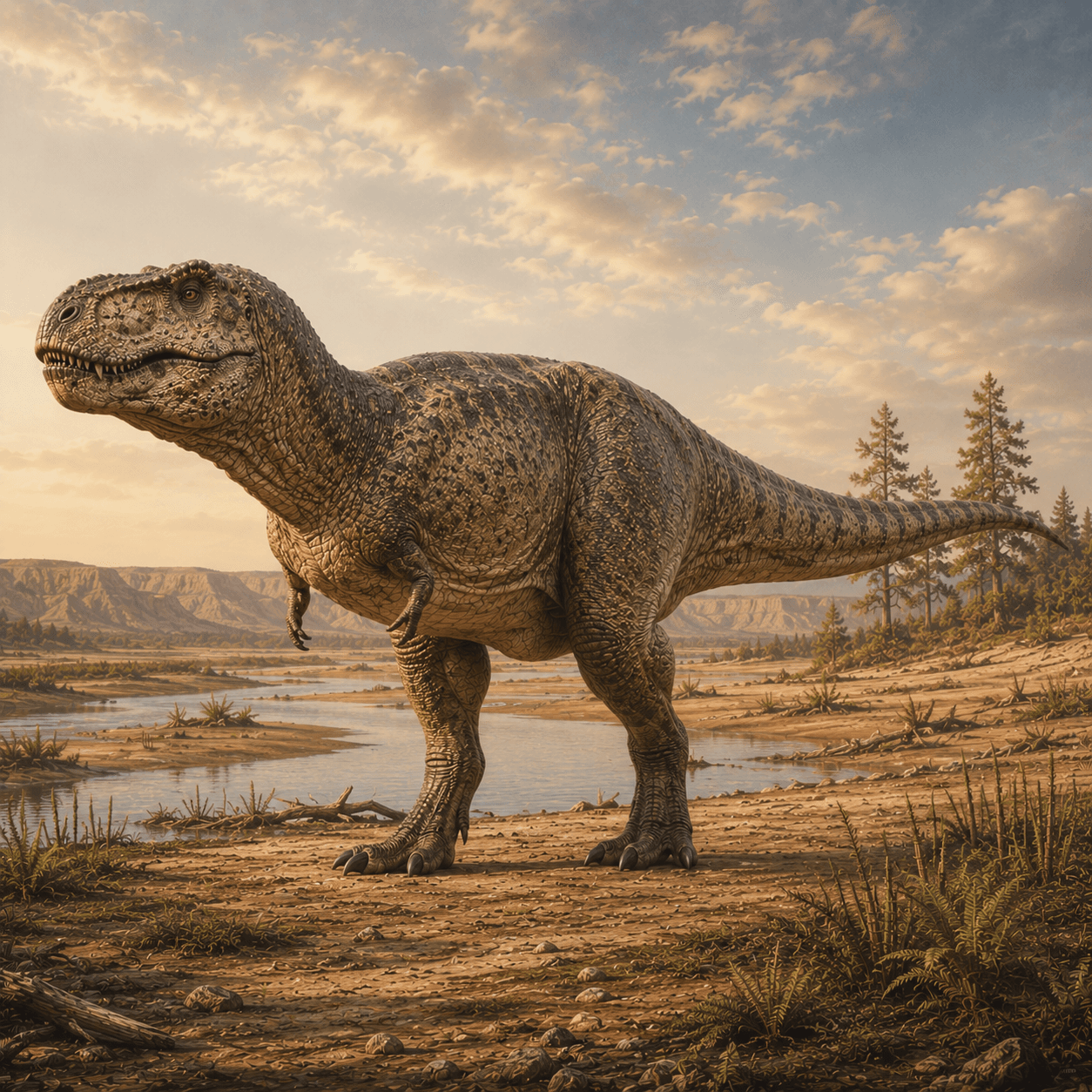
Illustrated reconstruction of TarbosaurusIllustration
Plate 23 · illustration onlyFA·TARB·1946
Classification
Theropod dinosaur
Family
Tyrannosauridae
Genus / Species
Tarbosaurus bataar
Diet
Carnivore
Range
Mongolia and Asia, especially Nemegt Formation records in the current atlas expansion.
Quick provenance answer

Where have Tarbosaurus fossils been found?

Tarbosaurus fossil records in Fossil Atlas are mapped as selected modern discovery locations, with 27 source-backed records currently shown. Mongolia and Asia, especially Nemegt Formation records in the current atlas expansion. Key mapped formations in the current dataset include Nemegt, Udurchukan, Beds of Nogon Tsav. These pins are fossil record locations, not a complete ancient habitat map.

Mapped records
27
Modern range note
Mongolia and Asia, especially Nemegt Formation records in the current atlas expansion.
Key formations
Nemegt, Udurchukan, Beds of Nogon Tsav
Map caveat
Modern fossil locations, not ancient habitat.
Field account

Tarbosaurus was a large tyrannosaurid from Late Cretaceous Mongolia and nearby regions. Fossil Atlas uses it to expand the Gobi Desert map beyond the Flaming Cliffs and into the Nemegt Formation, while noting that the naming history includes later taxonomic combinations.

Built to scale

Size against a person

Drawn true to scale on a metre ruler.

0 m2468101214161820222426
Tarbosaurus, 10 m (33 ft)Adult human, 1.8 m6× longer than a person is tall
Field measurements

Measurements & capabilities

MeasuredEstimate

Length

measured

10 m · 33 ft

Largest known specimens

Height

measured

3.2 m (10.5 ft)

Body mass

estimate

5,000 kg · 11,000 lb

Typical adult

Top speed

estimate

35 km/h · 22 mph

Modelled, debated

Life & behaviour

How Tarbosaurus lived

Tarbosaurus was the apex predator of the Nemegt Formation ecosystem in Late Cretaceous Mongolia, occupying the same ecological role as T. rex in North America during roughly the same period. Its skull was proportionally narrower than T. rex and its forelimbs were even more reduced, but its overall predatory approach was similar: bone-crushing jaws, large body, apex position in a rich prey community.

The skull

Long and deep with the same basic tyrannosaurid design as T. rex but proportionally narrower. The jaw muscles were still massive, but the mechanical emphasis differed slightly between the two genera.

Forelimbs

Even more reduced relative to body size than T. rex, with only two functional fingers. The most extreme limb reduction found in the tyrannosaurid family.

The Nemegt prey community

Shared the formation with large hadrosaurs including Saurolophus, the sauropod Nemegtosaurus, the ornithomimid Gallimimus, and the long-clawed Therizinosaurus.

Taxonomy

The relationship between Tarbosaurus bataar and Tyrannosaurus has been argued for decades. Some researchers have placed it within Tyrannosaurus; most current work keeps the two as separate genera.

Known from

Fossil evidence

01Skulls
02Teeth
03Partial skeletons
04Tyrannosaurid fossils
Key formations
NemegtUdurchukanBeds of Nogon Tsav
Geologic timeline

When they lived

Position of this animal’s known range across 252 million years of the Mesozoic and beyond.

252 MaToday

70-66 million years ago

From the notebook

Field notes

01

Tarbosaurus is one of the best-known large tyrannosaurids from Asia.

02

Its Nemegt Formation records give Fossil Atlas a strong post-Flaming-Cliffs Mongolia expansion.

03

It is often compared with T. rex, but Fossil Atlas keeps the records and regions separate.

Discovery & debate

How we know Tarbosaurus

Soviet-Mongolian expeditions collected the first material from the Nemegt Basin in 1946, and Evgeny Maleev named the animal Tyrannosaurus bataar in 1955. It was later separated into Tarbosaurus by other researchers. A significant legal case arose in 2012 when a Tarbosaurus skeleton was sold at auction in New York despite having been illegally exported from Mongolia. The specimen was eventually repatriated, and the case drew wide attention to the trade in illegally excavated Mongolian fossils.

Shared the landscape

Lived alongside

Animals known from the same deposits and time as Tarbosaurus.

Same family

Close relatives

Other members of Tyrannosauridae.

Modern discovery map

Tarbosaurus fossil discovery map

Pins show selected fossil records for Tarbosaurus; use them as modern discovery evidence, not a complete range map. Modern fossil discovery map: pins show where selected fossil and specimen records were found today, not ancient Earth positions. What does this mean?

Modern Fossil Discovery Map

Specimen evidence

Museum images and 3D records

These are sourced specimen assets, separate from reconstruction artwork. Only media with clear open or reusable rights is displayed by default.

Research notes

Tarbosaurus fossil map FAQ

Where have Tarbosaurus fossils been found?

Tarbosaurus is represented here by selected fossil records from mongolia and asia, especially nemegt formation records in the current atlas expansion. Fossil Atlas maps those records as modern discovery locations.

Is this map where Tarbosaurus lived?

No. The map shows modern fossil discovery locations from selected records. Ancient habitat and paleogeographic reconstructions are separate questions.

What formation is Tarbosaurus associated with here?

The current Fossil Atlas records include Nemegt. Formation coverage depends on the selected dataset and may not be complete.

Can I make a Tarbosaurus expedition card?

Yes. Use the expedition card generator to turn the Tarbosaurus map and specimen profile into a shareable card.

Data sources

Attribution

Caveats

Important notes

Selected fossil records from PBDB and museum biodiversity aggregators. This is not a complete fossil count by country; source labels and confidence notes help distinguish canonical paleobiology records from specimen-media records.

Reconstruction images are labeled illustrations and do not represent fossil evidence. Size, speed, and bite-force figures are typical published estimates and remain subject to revision as new specimens are described.

Trust note

Selected source-backed records

Maps use curated PBDB, museum, and specimen-source records with visible caveats.

Trust note

Modern discovery locations

Pins show where fossils were found or reported today, not exact ancient habitat positions.

Trust note

Reconstruction is not evidence

Artwork is labeled separately from specimen photos, maps, and source records.

Request desk

Request the next dinosaur map

Request another dinosaur like Tarbosaurus, submit a correction, or tell us what would make this page useful as a printable card.

Tell us which dinosaur or fossil site to map next, flag a correction, suggest a new pin, or request a card pack. Hit the button to open a prefilled email. We read every one.

Email request